How Instagram Facebook LinkedIn and YouTube Help Brands

Aysha
Hi, I'm Aysha, a Delhi University graduate currently pursuing a course in Digital Marketing. I'm passionate about learning and exploring the world of SEO, content writing, social media, and AI in digital marketing. Through my blogs, I aim to share useful information and insights in a simple and easy-to-understand way. I believe in learning new things and growing with the ever-changing digital world.
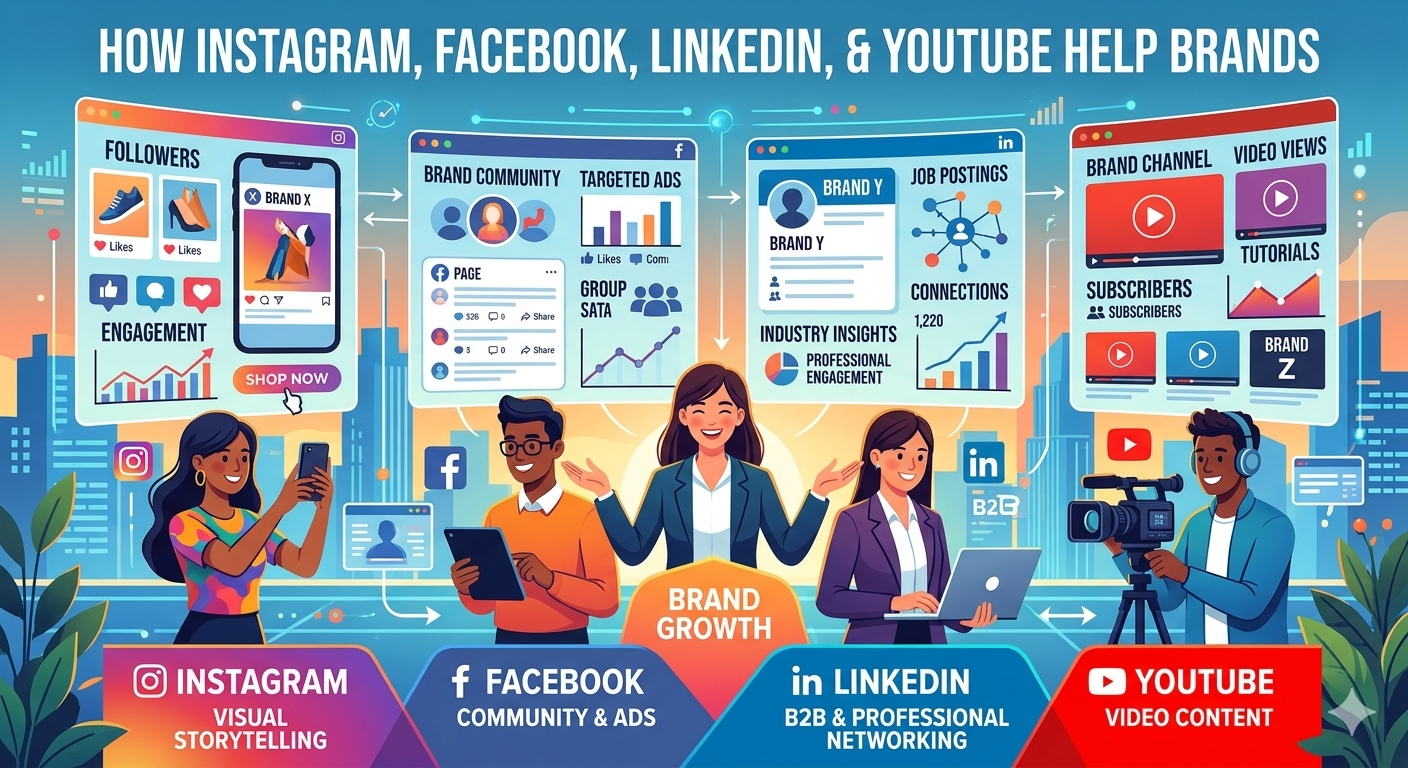
Table of Contents
How Instagram, Facebook, LinkedIn, and YouTube Help Brands
Introduction
Today, social media is not just a place to share photos, videos, or daily updates. It has become an important part of digital marketing. Almost every business, whether small or big, is using social media to reach more people and build its brand.
Platforms like Instagram, Facebook, LinkedIn, and YouTube give businesses a chance to connect directly with their audience. They can share their products, services, ideas, and stories without depending only on traditional advertising.
But how does each platform actually help a brand?
Let’s understand it in a simple way.
Why Is Social Media Important for Brands?
Before looking at individual platforms, let’s understand why brands need social media.
Social media helps businesses:
Reach a larger audience
Build brand awareness
Connect with customers
Promote products and services
Get feedback from their audience
Build trust and credibility
Drive traffic to their website
Generate leads and sales
The best part is that brands can communicate with their audience regularly. Instead of customers seeing a brand only through an advertisement, they can follow the brand and understand what it is all about.
How Instagram Helps Brands
Instagram is one of the most popular platforms for visual content. It is especially useful for brands that can show their products or services through photos, reels, stories, and other creative content.
1. Helps Build Brand Awareness
Brands can use Instagram to introduce themselves to new audiences. Regular posts and reels can help people recognise a brand and remember it.
For example, a clothing brand can share outfit ideas, new collections, styling tips, and customer reviews.
2. Reels Can Increase Reach
Short-form videos like Instagram Reels can help brands reach people who are not already following them.
A useful or entertaining reel can get more views and shares, which can bring new people to the brand’s profile.
3. Helps Build a Community
Instagram is not only about promoting products. Brands can also interact with their audience through comments, polls, questions, and stories.
This makes the brand feel more human and approachable.
4. Great for Product Promotion
Instagram is especially useful for fashion, beauty, food, travel, fitness, lifestyle, and other visual businesses.
Good-quality content can show customers how a product looks and how it can be used.
How Facebook Helps Brands
Facebook is still useful for businesses because it provides different ways to connect with customers and promote products or services.
1. Helps Reach Different Audiences
Businesses can create a Facebook page and share updates, offers, blogs, videos, and other content.
It can help brands stay connected with their existing customers while also reaching new people.
2. Facebook Groups Build Communities
Facebook Groups can be useful for creating a community around a particular interest.
For example, a fitness brand can create a group where people share their fitness journeys, ask questions, and discuss healthy habits.
This type of interaction can help build a stronger relationship between the brand and its audience.
3. Useful for Advertising
Facebook Ads allow businesses to promote their products or services to specific audiences.
Brands can target people based on factors such as interests, location, and other audience characteristics.
This can make advertising more focused than simply showing an advertisement to everyone.
4. Helps With Customer Communication
Customers can comment on posts, send messages, and ask questions. Brands can use these interactions to understand what their customers actually want.
How LinkedIn Helps Brands
LinkedIn is different from Instagram and Facebook because it focuses more on professional and business-related content.
It is especially useful for B2B businesses, professionals, recruiters, startups, and companies.
1. Builds Professional Credibility
Businesses can share industry news, company updates, expert opinions, case studies, and useful information.
This helps show that the brand understands its industry.
2. Helps With B2B Marketing
If a company sells products or services to other businesses, LinkedIn can be a useful platform for reaching decision-makers and other professionals.
For example, a digital marketing agency can share SEO tips, marketing strategies, and industry insights to attract potential business clients.
3. Helps Build a Professional Network
LinkedIn allows businesses and professionals to connect with people from different industries.
These connections can sometimes lead to partnerships, collaborations, job opportunities, and potential customers.
4. Supports Employer Branding
Companies can also use LinkedIn to show their workplace culture, employee achievements, company events, and job openings.
This helps people understand what it is like to work with or for the company.
How YouTube Helps Brands
YouTube is one of the best platforms for long-form video content. Unlike short social media posts, brands can use YouTube to explain topics in more detail.
1. Helps Educate the Audience
Brands can create tutorials, how-to videos, product demonstrations, reviews, and educational content.
For example, a skincare brand can create videos about skincare routines and explain how to use its products.
2. Builds Trust
Video allows customers to see and hear the people behind a brand.
When brands consistently provide useful content, people may start seeing them as a reliable source of information.
3. Helps Explain Products Better
Sometimes a photo or short caption is not enough to explain a product.
A YouTube video can show how the product works, its features, benefits, and how customers can use it.
4. YouTube Can Support SEO
YouTube videos can also appear in Google search results. By using relevant titles, descriptions, and keywords, brands can make their videos easier for people to discover.
Which Platform Should a Brand Choose?
A brand does not necessarily need to focus equally on every platform.
The right platform depends on the target audience, business type, and marketing goals.
| Platform | Best For |
|---|---|
| Visual content, Reels, lifestyle and product brands | |
| Communities, customer engagement, advertising | |
| B2B marketing, professional networking, credibility | |
| YouTube | Tutorials, education, product videos and detailed content |
For example, a fashion brand may focus more on Instagram, while a software company may find LinkedIn and YouTube more useful.
Can Brands Use All Four Platforms Together?
Yes, and this can actually be a smart strategy.
A brand can create one main piece of content and adapt it for different platforms.
For example, a brand creates a detailed YouTube video about “5 Digital Marketing Tips for Small Businesses.”
It can then:
Share a short version as an Instagram Reel
Post key points on Facebook
Share professional insights from the video on LinkedIn
Use Instagram Stories to promote the full video
This saves time and also helps the same content reach different audiences.
Final Thoughts
Instagram, Facebook, LinkedIn, and YouTube all have different strengths, but they have one common goal: helping brands connect with people.
Instagram can help brands become more visible and creative. Facebook can help build communities and communicate with customers. LinkedIn can help businesses build professional credibility and connections. YouTube can help brands educate their audience and explain their products in detail.
The important thing is not to be active on every platform just because everyone else is. A brand should first understand where its audience spends time and then create useful content for that platform.
Social media marketing is not only about getting likes and followers. It is about building relationships, creating trust, and turning an audience into loyal customers.
What Can You Do Next?
If you are learning digital marketing, start by exploring these platforms and noticing how different brands use them.
Look at their posts, reels, videos, captions, comments, and engagement. Try to understand what type of content works and why.
If you are learning digital marketing at Vidya Sarthi Institute, you can also use what you learn in your practical projects and start building your own understanding of social media marketing.
Remember, social media keeps changing, so the best way to learn is to keep experimenting, keep learning, and keep creating.

Is Facebook still useful for marketing?
Yes, Facebook is still useful for businesses. Brands can use it to build communities, share content, communicate with customers, and run targeted ads.
How can YouTube help a business grow?
YouTube allows brands to create detailed videos such as tutorials, product demonstrations, reviews, and educational content. These videos can help build trust and attract potential customers.
Which social media platform is best for a business?
There is no single best platform for every business. It depends on the target audience, business type, and marketing goals.